Blog
Bonbloc GearIQ Tea Leaf Grader
From Manual Inspection to Instant Quality Intelligence
Know How AI Tea Leaf Grading Machines are Changing Tea Operations
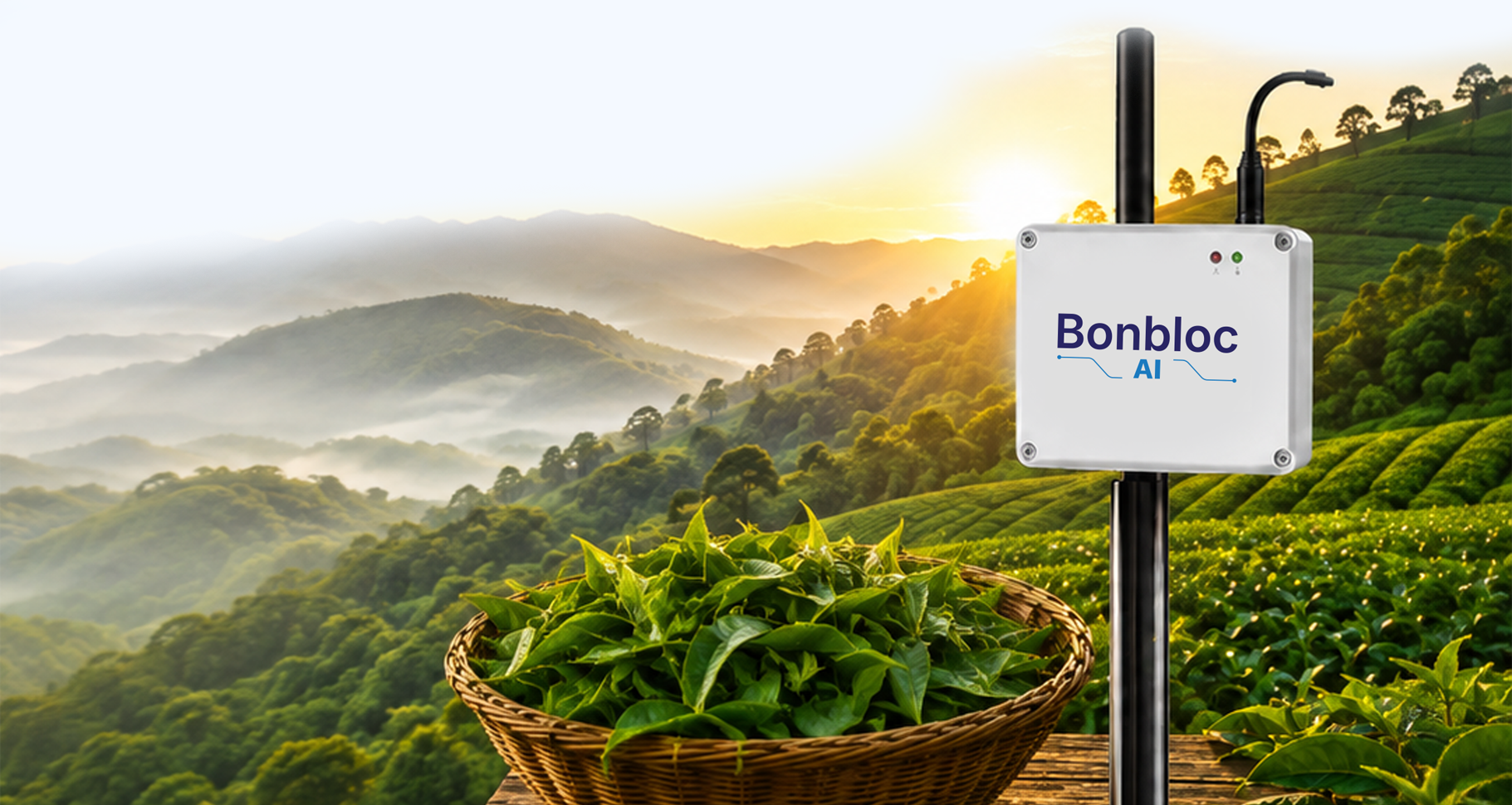
Tea grading has long depended on the expertise of trained inspectors. Across tea estates, collection centres, factories, and cooperatives, quality decisions are often based on visual inspection, experience, and subjective judgment. While this approach has served the industry for decades, it introduces inconsistencies that directly impact pricing, farmer trust, factory yield, and operational efficiency.
Today, AI tea leaf grading machines are transforming how tea quality is assessed. By combining computer vision, machine learning, sensor technology, and real-time analytics, solutions like the GearIQ Tea Leaf Grader from Bonbloc AI enable objective, repeatable, and auditable tea quality assessment at scale.
Why Manual Tea Grading is Becoming a Business Risk, not Just an Inconvenience
Tea operations across estates, factories, collection centers, and cooperatives are under pressure to run leaner and faster while multi-site collection gets more complex. Manual grading, even when it follows standard procedures, creates problems that compound over a season:
Farmer Disputes over the grade and price assigned to their delivery
Rejected Entries that could have been prevented with consistent scoring
Trust Erosion between farmers, collection centers, and factories
Increased Supervision Cost to catch inconsistent grading before it becomes a dispute
Quality Variance between shifts, sites, and inspectors
Delayed Payouts while disputed grades get resolved
Buyer Pushback when factory-graded batches don't match buyer expectations
Revenue Loss from all of the above stacking up across a season
None of these are edge cases. They are the day-to-day reality of grading tea by eye and touch, and they are also the exact list of problems an AI-based grading system is designed to remove.
What an AI Tea Leaf Grading Machine Actually Does
An AI tea leaf grading machine is a portable appliance that captures physical measurements and an image of a tea sample, then runs that data through a trained AI model to produce an instant, auditable quality score.
The GearIQ Tea Leaf Grader, for example, is built around:
| COMPONENT | FUNCTION |
|---|---|
Moisture and bag height sensors |
Capture readings the instant the rod enters the tea leaf bag |
Fixed-autofocus camera |
Captures an image of every leaf sample for AI analysis |
Onboard AI module |
TensorFlow-based grading model that scores the sample in under 5 seconds |
POS connectivity |
Syncs to existing point-of-sale systems via USB, Bluetooth, or Wi-Fi |
The device runs on an ESP32 microcontroller, stores data locally on the POS system, and is built for a 10+ year device life with a 1-year warranty and no regular servicing required, so it's designed to sit at a collection point and keep working without becoming its own maintenance problem.
How AI Tea Grading Works, Step by Step
The workflow behind an AI tea leaf grading machine follows a simple sequence, which is part of why it fits into existing collection processes instead of replacing them:
Tea Sample Collection
leaf is collected as usual at the point of intake
Image + Sensors
the device captures moisture, bag height, and a leaf image
Edge AI Processing
the onboard model analyzes the captured data on the device itself
AI Grade and Score
a quality score is generated automatically
POS Sync and Traceability
the result syncs to the point-of-sale system with a batch record
Analytics and Insights
grading data feeds into trend and quality reporting
Management Dashboard
supervisors and managers see the full picture in one view
What a Tea Quality Dashboard Should Actually Show You
A grading device is only as useful as the visibility it gives back to the business. The GearIQ dashboard tracks the metrics that matter for both the grading decision and the operational picture around it: moisture level, leaf condition, bag height, grading score, bag weight, collection speed, device battery, POS connectivity, audit trail, and quality trends. Having all of this in one dashboard is what turns a single grading event into ongoing, auditable quality intelligence rather than a one-off number.
Manual Grading vs. AI Grading: What Changes
|
Manual grading tells you
|
AI grading tells you
|
|---|---|
| Which inspector graded the bag | The exact moisture and leaf condition |
| What was written by hand | Why a grade was assigned |
| Whether a dispute occurred | Which bags need review |
| What the eye test estimated | What quality trend is emerging |
| What happened after the fact | Which action to prioritize next |
The difference isn't just speed, it's the shift from a record of what happened to a system that tells you what to do next.
The Measurable Impact of Switching to AI Tea Grading
Based on Bonbloc AI's reported outcomes for GearIQ deployments:
Who Uses AI Tea Leaf Grading Machines
GearIQ is built to work across the points where tea quality decisions actually get made — estates, factories, collection centers, and cooperatives. The consistent factor across all four is the same, whoever is doing the grading needs a decision they can trust and defend, whether that's a factory manager setting a batch grade or a collection center resolving a farmer's dispute on the spot.
Getting Started
Bonbloc AI positions GearIQ as part of a broader shift, described as engineering the AI-native enterprise, where operational data across a business (not just tea grading) moves from reactive record-keeping to predictive, confident decision-making. For tea operations specifically, that starts with turning subjective grading into predictive, auditable intelligence.
To learn more or request a demo of the GearIQ Tea Leaf Grader,
visit
www.bonbloc.com
or contact
sales@bonbloc.com.
Frequently Asked Questions (FAQs)
Categories
- DSCSA Compliance 2026: How to Meet FDA Traceability Requirements with Bonbloc’s Onelign MarginShield
- Bonbloc GearIQ Tea Leaf Grader
- Bonbloc's AI Appliance for Forklift Monitoring
- Bonbloc AI Lights Up Chepauk: Stadium Branding Experience Across All CSK Home Matches
- Bonbloc AI Goes Big: High-Impact OOH Branding
- BONbLOC Partners with Chennai Super Kings as Official AI Partner
- AI and the Future of CFO Leadership: Resilience, Risk & Transformation
-
The New CFO Mandate: Leading Digital Transformation
with ERP and AI - Why Finance Leaders in India need to Rethink NetSuite Legacy Tax